

Communities
Home / Communities / Women in Nanofabrication
Women in Nanofabrication (WIN)
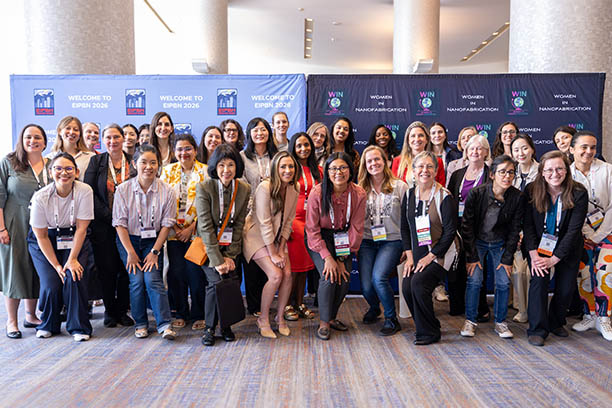
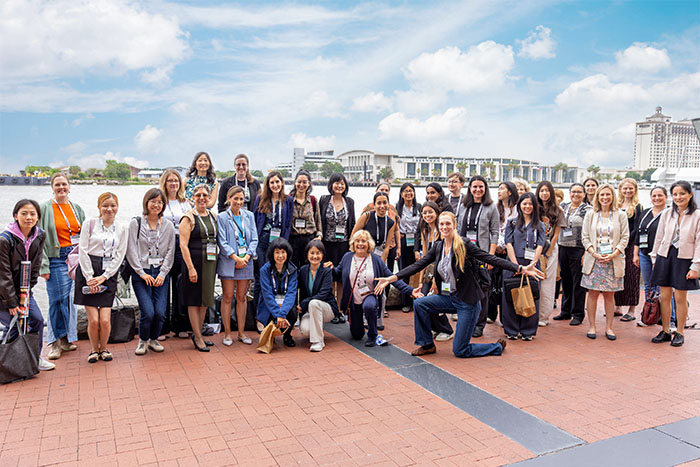
WIN is a monthly networking event that brings together professionals in science and industry from around the world to advance the fields of lithography and nanotechnology.
For more information about the WIN community, please join the EIPBN Women in Nanofabrication Group:
WIN Monthly Meetings
The WIN meetings were launched virtually through EIPBN Gather Town during EIPBN 2021 and are ongoing. Currently, we are hosting monthly ZOOM meetings on the first Friday of each month at 8:10 AM Montana time (MST). Look below for a complete list of meeting dates and speakers.
Please contact Jessica Andriolo at jandriolo@mtech.edu if you want the link to attend or if you are interested in presenting a technical talk about your research.
The WIN Lecture Series is generously sponsored by Heidelberg Instruments.

WIN New Meeting Series Speakers
Meeting Location: Virtual Meeting
Time: 7:10 AM PST, 8:10 AM MST, 10:10 AM EST, 3:10 PM London, 10:10 PM Beijing
Please find the latest updates below
Meeting Date
September 4
Speaker
Natalia Rueda (The University of Texas at Austin)
Bio: Natalia Rueda is a PhD student in Mechanical Engineering at The University of Texas at Austin, where she conducts process development for anti-reflective windows in the Nanostructures and Nano Manufacturing Laboratory. She has more than six years of experience in R&D, advanced manufacturing, and product innovation in the automotive industry through her work at AGP eGlass in Peru and the U.S. She began as an R&D Engineer developing liquid crystal glazing and later, in her role as R&D Project Manager, implemented a $1 million automated optical bonding prototype line for large-scale 3D glazing. As an R&D Project Manager, she supported a portfolio spanning nine glass-embedded electronics technologies, overseeing budgets, intellectual property, supplier scouting, and manufacturing task forces, including Tesla Cybertruck windshield glass tempering and electrostatic breakage control at AGP’s Mexico plant, as well as PDLC roof lamination stabilization for BMW and Volkswagen programs at the Belgium plant. Her work resulted in one patent, two utility models, and five additional patent applications. Since 2022, she has also served on the Innovation Zone (I-Zone) committee for the Society for Information Display’s annual Display Week. Natalia earned her M.Sc. and B.S. in Mechanical Engineering from Universidad de los Andes in Colombia.
Title & Abstract
Title: When Innovation Meets Manufacturing: Lessons That Shaped My Research
This presentation traces my journey from the development of liquid crystal glazing for automotive applications to PhD research focused on scalable optical technologies. My work in industry encompassed liquid crystal structures and materials, optical bonding, and antireflective and optical filter coatings, providing firsthand experience with the challenges of bringing first-to-market technologies from concept to production. Witnessing a promising automotive technology company ultimately enter Chapter 7 bankruptcy highlighted the critical role that a fundamental understanding of materials, interfaces, and manufacturing processes plays in successful product development and scale-up. These experiences shaped my approach to research and ultimately led to my current PhD work on nanostructured antireflective sapphire windows. Throughout the presentation, I will highlight the connection between fundamental research, product development, and scalability, and how designing with manufacturing in mind can help bridge the gap between promising optical innovations and viable technologies.
Upcoming Meeting Dates
October 2, 2026
November 6, 2026
December 4, 2026
January 8, 2027 (moved forward one week)
Past Meeting Series Speakers
Dr. Monica Serban (University of Montana)
From Concept to Prototype: 3D Printing for Translational Research and Product Development
July 3, 2026Dr. Alba Salvador-Porroche (Goethe University in Frankfurt)
New Strategies for the Fabrication of Electrical Contacts Using Focused Electron and Ion Beams
May 1, 2026Dr. Sezin Sayin (Leading the Nanofabrication Facility Manager at George Mason University)
Integrated Nanotechnologies for Biosensing and Drug Delivery: From Plasmonics to Functional Nanostructures
April 3, 2026Hannah Cho (Ohio State University)
Redefining Limits in MEMS: Nonlinear Dynamics Beyond Conventional Operation
March 6, 2026Dr. Karen Buchanan
At the Edge of Growth: Understanding the Saboteurs That Hold Brilliant Women Back
February 6, 2026Simone Schuerle (ETH Zurich, Switzerland)
Nanoengineering and control strategies for medical microrobots
Emma Moonen (DXcrete and Eindhoven University of Technology)
Sweat sensing devices based on discretised microfluidics for noninvasive kidney function assessment
December 5, 2025
Eider Berganza Eguiarte (Instituto de Ciencia de Materiales de Madrid)
Postprocessing and biofunctionalization strategies in two-photon lithography
November 7, 2025
Guest Chair: Afshan Begum (National Institute for Materials Science, Japan)
Emma Wadsworth (University of Utah)
Volumetric Additive Manufacturing by Computer Generated Holography
Céline Steenge (University of Twente)
3D self-aligned nanofabrication strategies for semiconductor devices
Isha Lodhi (Georgia Institute of Technology)</>
MEMS for nano-Newton resolution biological force sensing
October 3, 2025
Prof. Elaine Petro (Cornell University)
Insight into Electrospray Ion Beam-Surface Interactions from Experiments and Simulation
September 5, 2025
Prof. Christelle Prinz (Lund University)
Nanopores and nanostraws for cell transfection
August 1, 2025
Dr Ningxin Li (Clark Atlanta University)
Direct Exploration of Miniature Flexible Devices Empowered by van der Waals Materials
July 4, 2025
Dr. Katja Höflich (Joint Lab for Photonic Quantum Technologies at Ferdinand-Braun-Institut (FBH) in Berlin)
Direct is beautiful: exploiting the full potential of focused electron and ion beams for
nanofabrication
May 2, 2025
Guest Chair: Regina Luttge (Microsystems section and Chair of Neuro-Nanoscale Engineering at Eindhoven University of Technology)
General Discussion
April 4, 2025
Dr. Lucy Collinson (The Francis Crick Insitute)
Imaging Life across scales with corelative and multimodal imaging
March 7, 2025
Guest Chair: Natalya Kublik Crawford (The University of Texas at Austin)
Tatiana Escalante-Quinceño
Tailored Focused Electron Beam Induced Deposition nanotips for high-resolution Magnetic Force Microscopy
Amaia Saenz Hernandez
Developing superconducting devices using Focused Ion Beam for applications in quantum technologies
Gea van de Kerkhof
Correlative imaging between electron and light microscopy
February 7, 2025
Lucia Herrer (Spanish Research Council)
A scientist’s path around the multidisciplinary field of nanofabrication.
January 3, 2025
Ana Cohen (Quattrone Nanofabrication Facility at University of Pennsylvania)
December 6, 2024
Frances Allen (University of Kent, UK)
Exploring Atomic Effects Across Scales: A Nanofabrication Perspective
November 1, 2024
Guest Chair – Jana Chaaban (Head of Process and Applications Laboratory, Heidelberg Instruments Nano AG, Switzerland)
Jennifer Dong
Mega and nano: my engineering journey from aircraft manufacture to silicon nanowire fabrication
Ketki Srivastava
Everything, Everywhere, All at Once – Micro- and nano-fabrication for sensitive, homogeneous and spatio-temporally-resolved Raman and Infrared Spectroscopy Sensors
October 4, 2024
Monika Fleischer (Institute for Applied Physics, Eberhard Karls University Tübingen, Tübingen, Germany)
Exploring optical antennas and hybrid nanoantenna-systems
September 6, 2024
Gina Adam (George Washington University)
Nanoscale neuromorphics – a personal and professional journey
August 2, 2024
Dr. Laura C Zanetti-Domingues (CLF Octopus)
(Cryo-)vEM and (cryo-)CLEM at the CLF Octopus facility
July 5, 2024
Yagmur Demircan Yalcin (Eindhoven University of Technology, Mechanical Engineering Department)
A journey of a scientist in pursuit of curiosity
May 3, 2024
Eva de Leo (Binnig and Rohrer Nanotechnology Center)
Nanotechnology through my lens
April 5, 2024
Luisa Bozano (Applied Materials)
Electrons, Materials and all the beautiful interactions
March 1, 2024
Guest chair – Afshan Begum (Quantum Photonics Group, National Institute for Materials Science, Japan)
Junior researcher event
Fatemeh Kalantari, M.Sc, (Nano-electronics, RA, Shahid Rajaee Teacher Training University, Iran)
Improved sensing characteristics using Graphene Quantum Dots
Mahdieh Shojaei Baghini (Marie Skłodowska-Curie Early-Stage Researcher, University of Glasgow, Scotland)
Microfabricated resonators for the UHF band
Aakanksha Sud (JSPS Postdoctoral Fellow, Tohoku University, Japan)
Nonlinear coupling mediated by multi-magnon interactions in synthetic antiferromagnetic thin films
Plus, gain valuable career-building insights from Ann-Katrin U. Michel, Cluster Lead at Sensirion, Switzerland.
February 2, 2024
Loes Segerink (University of Twente)
The smaller, the better? Use of microfluidic devices for healthcare applications
January 5, 2024
Giulia Tagliabue (Ecole Polytechnique Federale de Lausanne)
Unraveling Hot Carrier Transfer Processes in Plasmonic Energy Devices
December 1, 2023
Leia Giorgiou (SRI International)
Nanofabrication Coast-to-Coast
November 3, 2023
Guest chair – Jana Chaaban (Heidelberg)
Junior researcher event
Wendy Chen (PhD student, University of Chicago and Argonne National Laboratory)
Using block-copolymer nanolithography to produce ultrathin SiNx isoporous membranes
Tina M. Hayward (PhD student, University of Utah)
Device fabrication for optical lever measurement of torsional motion
Chloé Bureau-Oxton (postdoc researcher at IBM Research Europe – Zürich)
A Si-MOS fin-FET as an on-tip scanning electrometer
Xia Liu (Professor in Beijing Institute of Technology, China)
Multiple and Gray-Scale Thermal Scanning Probe Lithography
October 6, 2023
Follow the Nano-brick Road
September 1, 2023
Kirsten Moselund (PSI)
A career in semiconductors – electrons, photons and qubits
August 4, 2023
Marianna Sledzinska (Catalan Institute of Nanoscience and Nanotechnology, Spain)
Title Fabrication techniques for phonon engineering in low dimensional materials
July 7, 2023
Joint WIN+WAVES meeting
Networking event with an informal discussion “Enhancing professional visibility by networking via networks”
May 5, 2023
Elena Pinilla-Cienfuegos (Centro de Tecnología Nanofotónica de Valencia, Universidad Politécnica de Valencia)
Accurate & Reproducible Method for Single Nanoparticle Positioning on Nanostructures
April 7, 2023
Guest Chair: Natalya Kublik (Arizona State University)
Young Investigators
Beihang Yu (Postdoc at the Berkeley Lab, working with Dr. Ricardo Ruiz and Dr. Ron Zuckermann)
Bioinspired, sequence-defined polymer brushes as patternable surface modification monolayers for semiconductor/bio interfaces
Petrovic Jelena (PhD in microtechnology and currently a Scientist Postdoc ETH Zurich and Paul Scherrer Institute, Switzerland with Lucia Romano)
Microstructured fiber-based probes for application in optogenetics
Adan Azem (University of British Columbia, Canada)
Infrared waveguide integrated superconducting nanowire single-photon detectors (work in progress)
January 6, 2023
Leeya Engel (Assistant Professor, Faculty of Mechanical Engineering, Technion – Israel Institute of Technology)
There is no single track to the tenure track: my experience from PhD and Postdoc to Assistant Prof.
December 2, 2022
Carla Perez Martinez (UCL)
Using rockets in nanomanufacturing
November 4, 2022
Updates from our young investigators
Afshan Begum, National Institute for Materials Science and University of Tsukuba (Japan) – Fabrication of large array photonic crystals to observe double Dirac-cones materialized by accidental degeneracy
Alba Arroyo-Fructuoso, University of Valencia (Spain) – Modulation of the Critical Current Induced by an Electric Field in Superconducting Nanowires Grown by He+ FIBID
Sarah Spector, Massachusetts Institute of Technology (USA) – Nonplanar Nanofabrication via Interface Engineering
Mengdi Bao, Rochester Institute of Technology (USA) – Simple, Sensitive and Instrument-free Detection of Viral Nucleic Acids
Victoria Ravel, George Washington University (USA) – Dual-compartment microelectrode array for investigation of neuronal network media exchange
October 7, 2022
Farnaz Niouri (MIT)
Engineering at the Limits of the Nanoscale
September 2, 2022
Sijia Xie (Shanghai Industrial mTechnology Research Institute (SITRI), Shanghai, China)
Hybrid structures by direct write lithography—Tuning the contrast and surface topography of grayscale photoresist with nanoimprint (JVSTB- EIPBN 2022 Best Paper Award)
August 5, 2022
Theda Daniels-Race (LSU)
One of These Things is Not Like the Others: An African-American Woman’s Journey to the Academy
July 2, 2022
Jessica Andriolo (Montana Technological University and Alpha Technology, LLC)
Applied Nanoscale Solutions for the Environment, Medicine, and Materials Fabrication
May 6, 2022
Grande walk: Highlight on students and postdocs posters
Poster session and Exhibition Hall EIPBN 2021
April 1, 2022
Dr. Lucia Romano (ETH Zurich; Paul Scherrer Institute; and University of Catania)
Gas phase MacEtch: unparalleled high aspect ratio silicon nanostructures
March 4, 2022
Dr. Rosa Córdoba Castillo (Universitat de València)
How I went from PhD to junior lead researcher
February 4, 2022
Helen Kardan, ASML
My career path through the cultures
January 7, 2022
Dr. Alexandra Joshi-Imre (University of Texas at Dallas)
Microfabrication of neural interface electrode arrays for chronic in-vivo applications
Yutika Badhe (University of Texas at Dallas)
Stretchable electronics based on a nanofiber reinforced soft composite material
December 3, 2021
Dr. Elizabeth A. Dobisz (Senior Consultant at SLAC National Accelerator Laboratory)
My example of a career path in Nanofabrication
November 5, 2021
Dr. Anuja DeSilva (Lam Research)
My career path learnings in Semiconductor Research: How to persevere and advocate?
October 1, 2021
Natalya Kublik (Arizona State)
Increasing density of additively manufactured copper parts utilizing solid-nanoporous hybrid feedstock with higher energy absorption properties
Women in Nanofabrication Award
The Women in Nanofabrication Award is given to WIN professionals in recognition of their long term contributions to EIPBN.
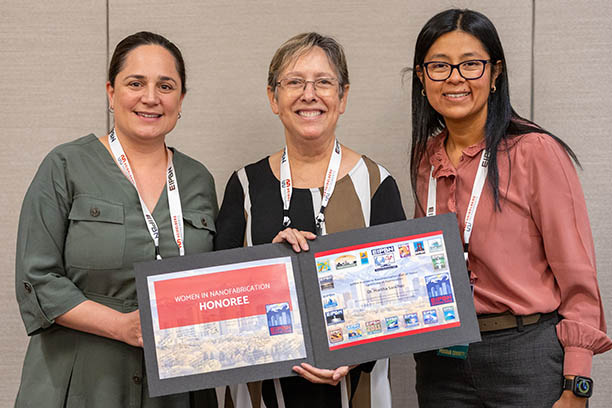
The 2026 Women in Nanofabrication Award was given to Martha Sanchez, who has been involved with EIPBN since her invited talk at the 2003 conference in Tampa, Florida. She has contributed as a coauthor on numerous EIPBN presentations, reviewed abstracts, served on the Steering Committee from 2018 to 2024, and was the 2021 Program Chair, delivering a very successful online conference at a challenging time. She has also been actively involved in the EIPBN Women in Nanofabrication group.